
WELCOME BONUS 300%
UP TO €2000 + 100
FREE SPINS
UP TO €2000 + 100
FREE SPINS
Home → Blackjack
Blackjack at Roulettino: Variants, Rules and Payouts
Soft 17: Dealer Hits or Stands
The Dealer Hits Soft 17 rule modifies the House Edge by approximately +0.22 percentage points compared to a dealer standing on Soft 17. This means that for every 100 EUR wagered, the casino expects to retain 0.22 EUR more on average. For players, this translates to a slightly lower Return To Player (RTP) percentage in games where this rule is applied.
In contrast, rules like Resplit Aces (RSA) and Double After Split (DAS) can improve the player's RTP. RSA reduces the House Edge by about 0.08 percentage points, while DAS can improve it by around 0.14 percentage points. These positive rule modifications can help to offset less favourable rules such as the dealer hitting Soft 17.
For instance, Blackjack games with liberal rules, such as Blackjack Liberal Vegas Strip, feature a House Edge of only 0.28% due to favourable combinations including the dealer standing on Soft 17. This contrasts significantly with games where the dealer hits Soft 17, potentially increasing the House Edge and thus reducing the player's theoretical return over time.
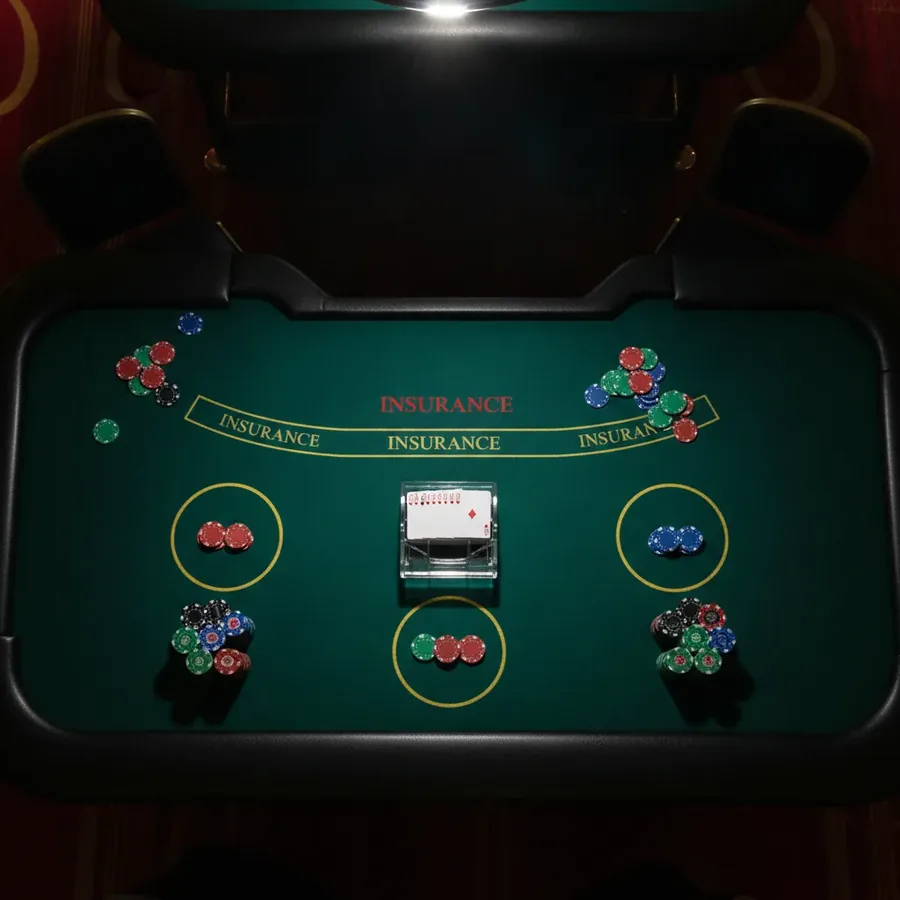
Side Bets don't count towards bonus turnover
Side bets in casino games, such as those found in Infinite Blackjack with its four options: Any Pair, 21+3, Hot 3, and Bust It, do not contribute to the wagering requirements of bonuses. This is a common stipulation across many online casinos, meaning wagers placed on these additional bets will not reduce the turnover needed to withdraw bonus funds.
The primary bonus offer at Roulettino is a 300% welcome bonus up to €2,000 plus 100 free spins. The wagering requirement for this bonus, which is typically a multiple of the bonus amount (e.g., x40), must be met through eligible game contributions. Since side bets are excluded, players must focus on qualifying games.
Furthermore, table games generally contribute only 10% towards bonus turnover, while slots contribute 100%. This means that to meet the wagering requirements, a significantly larger amount must be wagered on table games compared to slots. Excluded side bets on games like Infinite Blackjack further reduce the effective contribution from these types of wagers.
When can you increase your bet?
The ability to increase your bet size is directly linked to the wagering requirements of any active bonus. For example, with a 300% welcome bonus up to €2,000, a player depositing €666.67 would receive the maximum bonus of €2,000, totalling €2,666.67. If the wagering requirement is x40, this equates to €80,000 in total turnover needed.
Once the wagering requirement of €80,000 is met, any bet size is permissible for future play and withdrawals without bonus restrictions. Until then, bet increases must be carefully managed to ensure they contribute effectively towards the turnover. Bets on excluded games, such as side bets on Infinite Blackjack, will not count towards this requirement.
Players should also be aware of specific game contributions, with table games like Blackjack contributing only 10% to the wagering requirement. This means that for every €100 bet on a table game, only €10 counts towards the €80,000 turnover. This significantly impacts how quickly a player can increase their bet size while still working on bonus clearance.
Even Money only possible with Dealer Ace
The 'Even Money' option in Blackjack, often presented as a payout of 1:1 on your hand when the dealer shows an Ace, is a specific side bet. This offer is only made available when the dealer's upcard is an Ace. It essentially allows the player to receive their stake back immediately if the dealer has Blackjack.
This option is distinct from the main Blackjack payout, which is typically 3:2 for a natural Blackjack (an Ace and a 10-value card). For example, a €10 bet with a 3:2 payout yields €15, whereas an 'Even Money' payout of 1:1 yields only €10. It is a way to secure a small win rather than risk a loss.
The Blackjack Insurance side bet, which pays 2:1 and is also offered when the dealer has an Ace, is a similar concept. However, Blackjack Insurance is generally considered a poor bet for players following basic strategy, with an RTP of 92.53% and a House Edge of 7.47%, significantly higher than standard Blackjack rules.
Splitting costs double bet: plan budget
When a player chooses to split a pair in Blackjack, such as two Aces or two 8s, each card becomes the start of a new hand. This action requires the player to place an additional bet equal to their original wager on the new hand. For example, if your initial bet was €10 and you split a pair, you will then have two hands, each with a €10 bet, totalling €20.
This doubling of the bet on split hands means that players need to budget accordingly. A player starting with a €10 bet who splits a pair will immediately have €20 at risk. This is particularly relevant for games like Blackjack 6 Decks, S17, DAS, DOA, with an RTP of 99.54%, where splitting is a common strategic play.
The cost of splitting can also be compounded by other actions like doubling down after a split (DAS), which further increases the bet on a hand. Players should consider their total budget and the potential for multiple bets to be active simultaneously. For instance, splitting a pair and then doubling down on one or both hands can significantly increase the amount wagered per round.
Blackjack variants at a glance
| Variant | Payout | House edge | Rule | Bet range |
|---|---|---|---|---|
| Blackjack Auszahlung 6:5 statt 3:2 (6 Decks) | 98.15% | 1.85% | Ersatz von 3:2 durch 6:5 fügt exakt +1.39 Prozentpunkte zum Vorteil des Casinos hinzu – stärker als jede andere Regeländerung. Bei $10 Einsatz zahlt Blackjack $12 statt $15. | Blackjack 6:5, Gewinn 1:1 |
| Blackjack Split / Double / H17 – Regel-Effekte | n.a. (Regel-Modifikatoren) | H17 +0.22 Prozentpunkte; RSA −0.08 Prozentpunkte; DAS −0.14 Prozentpunkte | Dealer Hits Soft 17 verschlechtert RTP um 0.22 Prozentpunkte; Resplit Aces verbessert um 0.08 Prozentpunkte; Double After Split verbessert um ca. 0.14 Prozentpunkte; 6 Decks statt 8 – ca. 0.02 Prozentpunkte. | Double – Einsatz ×2 mit einer Karte; Split – bis 4 Hände; Ass-Split meist mit einer Karte. |
| Blackjack Surrender (Late Surrender) – Regel-Effekt | n.a. (Regel-Modifikator) | −0.08 Prozentpunkte | Spieler gibt Hand nach Dealer-Blackjack-Prüfung auf, verliert die Hälfte des Einsatzes. Verbessert RTP um ca. 0.08 Prozentpunkte. Early Surrender ist wesentlich wertvoller (bis −0.6 Prozentpunkte), aber extrem selten. | Rückzahlung 50% des Einsatzes |
| Blackjack 6 Decks, S17, DAS, DOA, Auszahlung 3:2, Basisstrategie | 99.54% | 0.46% | Dealer steht auf Soft 17; Verdopplung auf jeder Zweierkarte; Verdopplung nach Split erlaubt; keine Aufgabe. Basisstrategie ist für diesen Wert zwingend | Blackjack 3:2, normaler Gewinn 1:1, Insurance 2:1 |
| Blackjack Liberal Vegas Strip (liberale Regeln, 3:2) | 99.72% | 0.28% | Günstigste Regelkombination: S17 + DAS + Resplit + Late Surrender. Standardabweichung 1,15 | Blackjack 3:2, Gewinn 1:1 |
| Blackjack Ein Deck, klassische Regeln, 3:2 | 99.85% | 0.15% | Weniger Decks = niedrigerer Vorteil; ein Deck gibt ca. −0.48 Prozentpunkte gegenüber 8 Decks. Oft durch 6:5 Auszahlung kompensiert. | Blackjack 3:2, Gewinn 1:1 |
What a Natural Blackjack Practically Pays Out
A natural Blackjack, achieved with an Ace and a ten-value card on the initial two cards, typically pays out at 3:2. This means a €10 bet would return €25, comprising the original €10 stake and €15 in winnings. This payout structure offers a better return compared to a standard win, which pays 1:1.
However, some tables, such as those offering a 6:5 payout for a Blackjack, significantly alter this. A €10 bet on a 6:5 Blackjack would only return €22, a €3 reduction in winnings compared to the standard 3:2 payout. This change increases the casino's house edge by 1.39 percentage points.
The 'Blackjack Ein Deck, klassische Regeln' variant offers a favourable RTP of 99.85% with a house edge of 0.15%, largely due to its 3:2 payout. In contrast, a game with a 6:5 payout, like 'Blackjack Auszahlung 6:5 statt 3:2', has a lower RTP of 98.15% and a higher house edge of 1.85%.
Double Down after Split: which tables allow it
The ability to double down after splitting a pair is a significant rule that can benefit players. This option is available on tables such as 'Blackjack Split / Double / H17' and 'Blackjack Liberal Vegas Strip', offering strategic flexibility.
Tables like 'Blackjack 6 Decks, S17, DAS, DOA' explicitly permit doubling after a split, often referred to as DAS. This rule, combined with standing on soft 17 (S17) and doubling after split (DAS), contributes to a player-favourable RTP of 99.54% when basic strategy is employed.
Conversely, not all variations specify or allow this manoeuvre. While 'Blackjack Liberal Vegas Strip' includes DAS, other fundamental blackjack variants might not explicitly list it, potentially leading to a higher house edge if this option is unavailable.
Bonus conditions often exclude Blackjack completely
The 300% welcome bonus up to €2,000, combined with 100 free spins, may have specific conditions regarding game contributions. It is common for table games, including Blackjack, to be entirely excluded from contributing towards the wagering requirements of such bonuses.
This exclusion means that any funds deposited to claim the welcome bonus cannot be used to clear the bonus through Blackjack gameplay. This is a critical term to review, as it limits the applicability of the bonus offer for Blackjack enthusiasts.
While Slots contribute 100% to bonus wagering, Blackjack games at Roulettino are noted to contribute only 10%. This significantly longer wagering path makes clearing the bonus through Blackjack gameplay impractical compared to playing slots.
Blackjack Contributes Only 10 Percent to Wagering
For players aiming to meet wagering requirements, Blackjack games contribute a mere 10% towards the total amount that must be wagered to release bonus funds. This means for every €10 bet on Blackjack, only €1 counts towards the wagering target.
This 10% contribution rate is considerably lower than the 100% contribution typically offered by Slot games. Consequently, a player would need to wager ten times more on Blackjack than on Slots to achieve the same progress in meeting the bonus terms.
For example, if a €2,000 bonus requires x40 wagering, this equates to €80,000 in total turnover. Playing only Blackjack, a player would need to place €800,000 in bets to meet this requirement, as only 10% of each bet counts.
16 vs 10 played incorrectly: most common error
A frequent strategic error in Blackjack involves how players handle a hand totalling 16 when the dealer shows a 10-value card. Basic strategy dictates hitting in this situation, as standing on 16 is highly disadvantageous against a strong dealer upcard.
The 'Blackjack 6 Decks, S17, DAS, DOA, Auszahlung 3:2, Basisstrategie' variant, with its 0.46% house edge, relies on correct basic strategy application. Incorrectly playing a 16 vs. a dealer's 10 increases the house edge significantly beyond this calculated value.
For instance, standing on a 16 when the dealer has a 10, instead of hitting, can increase the house edge by approximately 1.96 percentage points. This single misplay dramatically reduces the player's expected return on investment over time.
Insurance vs Even Money on Own Blackjack
Blackjack Insurance is a side bet offered when the dealer's upcard is an Ace, allowing a player to wager up to 50% of their main bet. This insurance pays out at 2:1, but its typical RTP of 92.53% presents a house advantage of 7.47%. Basis strategy consistently advises against taking this bet, as it significantly lowers the overall return to player, unlike even money payouts.
In contrast, an 'Even Money' payout, also known as a 1:1 payout, is offered when a player achieves a Blackjack and the dealer also has an Ace showing. This specific payout scenario is generally more favorable than the Insurance side bet. While not as lucrative as the standard 3:2 Blackjack payout, it avoids the steep house edge associated with the Insurance bet.
The decision to take Insurance versus accepting an even money payout hinges on risk assessment and the specific game rules in play. For instance, Blackjack tables offering a 6:5 payout for a Blackjack instead of the traditional 3:2, result in a higher house advantage of 1.85%. This makes the 6:5 payout less attractive overall, even when compared to the potential losses from a rejected Insurance bet.
Stand-on-17 Rule and Its Meaning for Players
The 'Dealer Hits Soft 17' rule, often abbreviated as H17, directly impacts the house edge by increasing it by approximately 0.22 percentage points compared to a dealer standing on all 17s (S17). This means that when the dealer must draw on a soft 17, the casino's average retained portion of the wager increases.
Conversely, the 'Dealer Stands on Soft 17' rule (S17) is more player-favorable, reducing the house edge. For example, in a game with liberal rules, a high RTP of 99.72% is achievable with an S17 rule, alongside doubling after splits and late surrender. This combination offers a significantly lower house advantage of 0.28%.
Players benefit from the S17 rule as it reduces the frequency of the dealer improving their hand after the initial two cards. This leads to a slightly higher theoretical return on investment for the player over the long term. For a game played with 6 decks and S17, the RTP can reach 99.54% when other favorable rules are applied.
When does the table max bet apply?
The maximum bet limit at a table dictates the upper threshold for wagers a player can place on a single hand or round of play. For example, at Lightning Blackjack, the bet range extends from 1 EUR up to 2,500 EUR, indicating the maximum allowed wager for this Evolution game. This limit is crucial for managing bankrolls and understanding potential win amounts.
Different tables within the same casino can feature varying maximum bet limits. Infinite Blackjack, for instance, offers a higher maximum bet of up to 5,000 EUR, accommodating players with larger bankrolls. This contrasts with Blackjack Party, which has a lower maximum bet of 1,000 EUR, suggesting a more casual player focus.
Understanding the table's maximum bet is particularly relevant when considering bonus wagering requirements. For example, a bonus might require 10% credit from table games, meaning a 100 EUR bonus requires 10,000 EUR in wagers if playing slots (100% contribution), but a significantly higher amount if only table games are played due to their lower contribution rate.
Bonus 100 EUR with 10 percent credit
A 100 EUR bonus with a 10 percent credit for table games translates to a substantial wagering requirement. To fulfill the bonus conditions, players would need to wager a total of 10,000 EUR in slots (100% contribution) or 100,000 EUR across table games (10% contribution). This means the effective wagering requirement is multiplied by ten when focusing solely on table games.
This wagering structure means that for every 100 EUR wagered on table games, only 10 EUR contributes towards clearing the bonus. Therefore, a player aiming to clear the 100 EUR bonus solely through table game play would need to place 100,000 EUR in bets. This differs significantly from slots, where 100 EUR wagered contributes the full 100 EUR.
The bonus terms also specify a welcome offer of 300% up to 2,000 EUR plus 100 free spins. This implies that the 10% credit for table games would also apply to wagering requirements stemming from this larger welcome bonus, making it even more challenging to clear through table game play alone.
Early Surrender is removed from many tables
Early Surrender, a valuable rule allowing players to forfeit half their bet before the dealer checks for Blackjack, is notably absent from many tables. This rule typically improves the RTP by up to 0.60 percentage points, making its removal a significant disadvantage for players seeking optimal returns.
The absence of Early Surrender means players must often play out hands that might otherwise be surrendered, potentially leading to larger losses. For example, Blackjack Surrender, which allows surrender after the dealer checks, offers a much smaller RTP improvement of approximately 0.08 percentage points, highlighting the value of the earlier option.
Players should be aware that tables offering Late Surrender, where the player surrenders after the dealer has checked for Blackjack, provide a less advantageous scenario. This is because the opportunity to cut losses based on the dealer's potential Blackjack has already passed, making the surrendered bet amount less impactful on the overall RTP.
Contact
Live - online chat
Banking









Providers












Roulettino Casino 2026